
by Kim Berg, CoopCrate staff writer
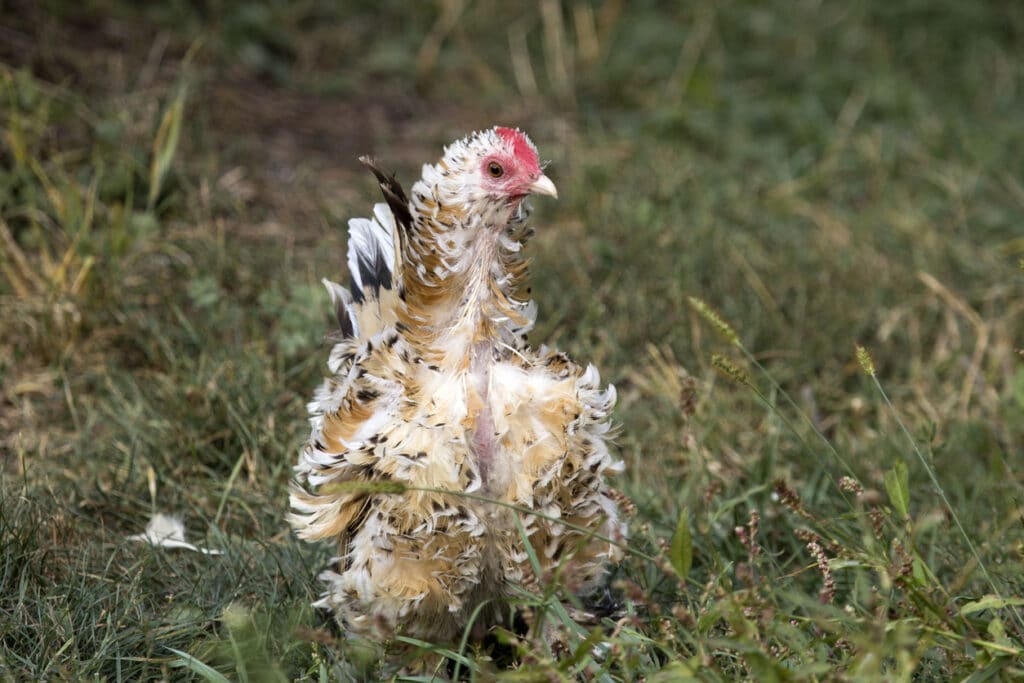
Molting is a chicken’s natural process of replacing old feathers with new ones. During this time, even your most productive egg layers might stop laying, and might act a bit lethargic overall. Feather loss begins near the chicken’s head and continues down the rest of their body. Some chickens tend to molt all at once, where they practically look naked! Other chickens will loose their feathers in patches. And sometimes, a chicken’s molt goes practically unnoticed by their owner. Here is some helpful information about molting that is sure to come in handy for all chicken owners!
When do chickens molt?
A chicken will molt at several different points throughout their life. Chicks start their molting process at about one week of age, replacing down feathers with baby feathers. They will then molt again around 2 months of age, replacing baby feathers with new ones. Adult chickens will molt around 18 months of age, and will do so annually after that.
An adult chicken’s molt is normally triggered by decreasing daylight hours, so it is likely to start during the late summer or fall. This timing prepares your chicken for the winter months, when newer feathers will help to protect them from the cold. The average molt takes 8-12 weeks to complete. Your more productive, younger hens will recover from the molt much faster than your older hens.
How can you help?
First off, your chickens will appreciate less handling during the time of their molt. It is common for the area where the feather shaft meets the skin to be quite sensitive. You will need to ensure that your flock has plenty of room in the coop as a result. The coop should also provide access to plenty of water and good ventilation to help generate feather growth. Do not add new flock members while your present flock is molting, as this can put them under more stress.
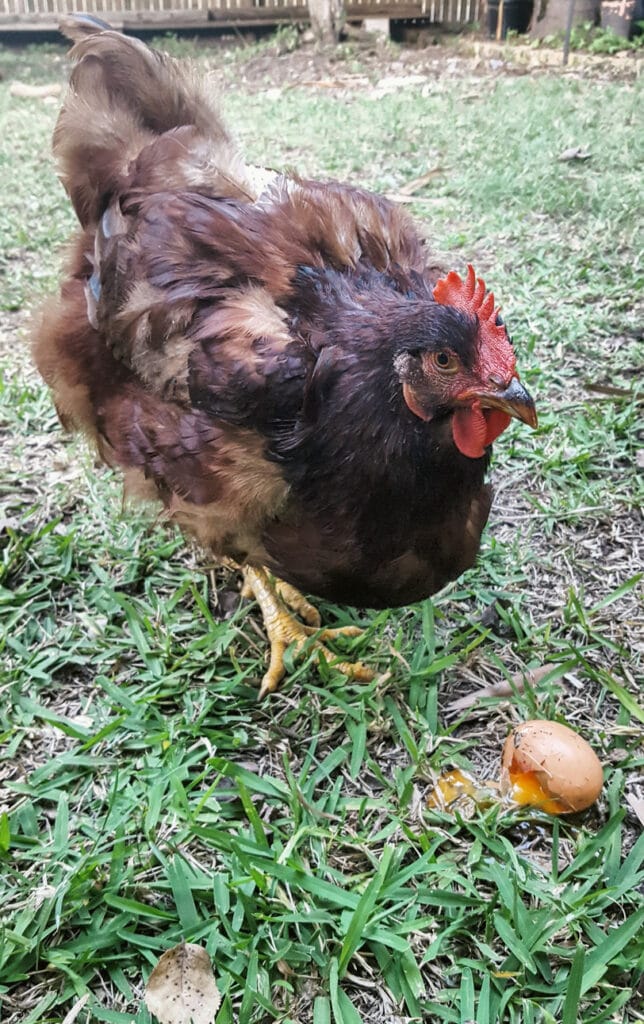
Increasing your chickens’ protein intake can also help them during their molt. After all, feathers are about 80-85% protein! Black oil sunflower seeds are an awesome choice for molting chickens, as they provide protein and methionine, an amino acid that also assists with feather growth. You can also consider adding nuts, peas, soybeans, mealworms, or tuna fish for a protein-rich diet. Some chickens may look to their own eggs for a source of protein, so it is best to provide them with alternate options!
Molting is a normal and natural process that all chickens go through. So, try not to panic when your chickens start losing feathers and stop laying eggs! Reduce handling, ensure that your chickens have plenty of room to roam, and feed a high-protein diet during this time. Your chickens will be rocking fresh feathers again before you know it, and will be ready to take on the colder season ahead!