
by Kim Berg, CoopCrate staff writer
Winter is coming! If you properly prepare your chickens for winter, they will be happier, healthier, and may reward you with consistent egg production. You must consider a few things prior to the change of seasons, including lighting, the design of your coop, the water you supply to your flock, and some extra care that might be needed. How can you help your chickens thrive this winter? Keep reading to learn more.
Egg-Laying and Light
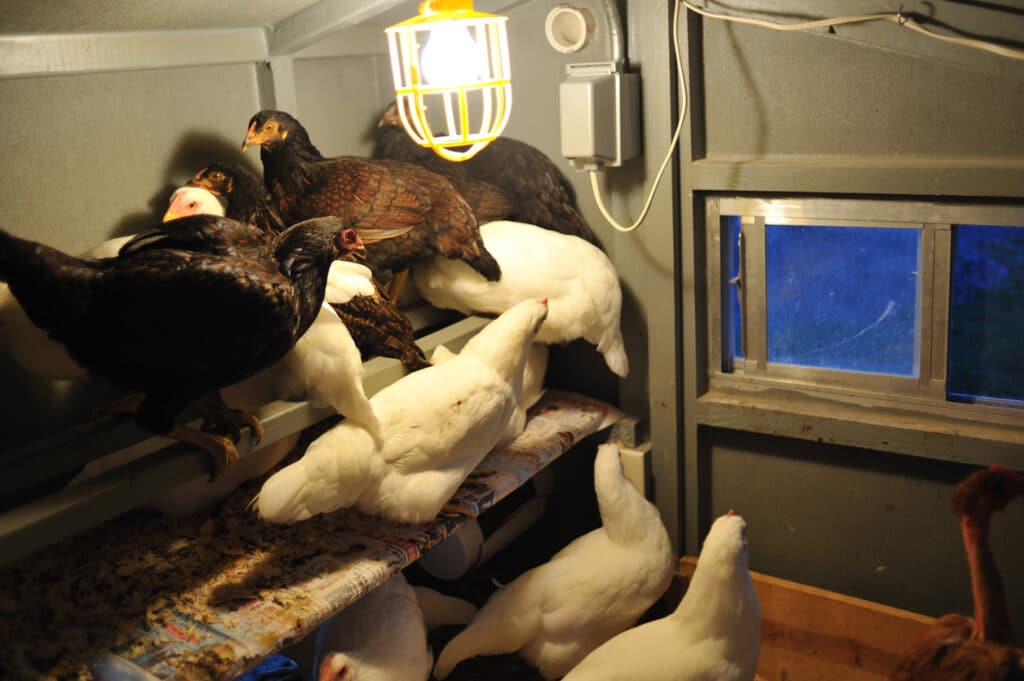
The early fall is here, and you may be noticing that your chickens are molting. Once this process is complete, egg laying will slow as the days get shorter. If you wish to keep egg-laying consistent, consider artificially extending the hours of daylight by adding a light source to the coop. A 40-watt bulb, left on for a maximum of 10 hours per day, should be sufficient. Just ensure that your lights are properly installed and are safe for outdoor use!
The Coop
Next, you might be considering methods of keeping your chickens warm and dry. Insulation of the coop is not the right answer here, as too much insulation decreases airflow. Ammonia buildup and trapped humidity can negatively affect the health of your flock. Consider adding screened windows that you can leave open during the day and then close at night to keep your chickens warm. Always check to make sure your coop is still waterproof before the start of every rainy season.
Besides the structure of your coop, you should continue to change your chickens’ bedding frequently. Clean, dry bedding is more likely to keep them comfortable and warm.
Water
You will need to change your chickens’ water source often during the winter months, and consistently check for ice layers that may need breaking. You might consider purchasing a heated bucket to prevent this from happening in the first place!
Extra Care
Lastly, make sure you are well equipped to prevent frostbite in your flock. You can stock petroleum jelly, which you would apply liberally to the wattle and comb of your chickens. Any time you notice that these areas are dry, reapply the petroleum jelly as needed. Just be sure to avoid contact with your chicken’s eyes! If wattles and combs ever appear black, your chicken may already have frostbite.
Breeds and Behaviors
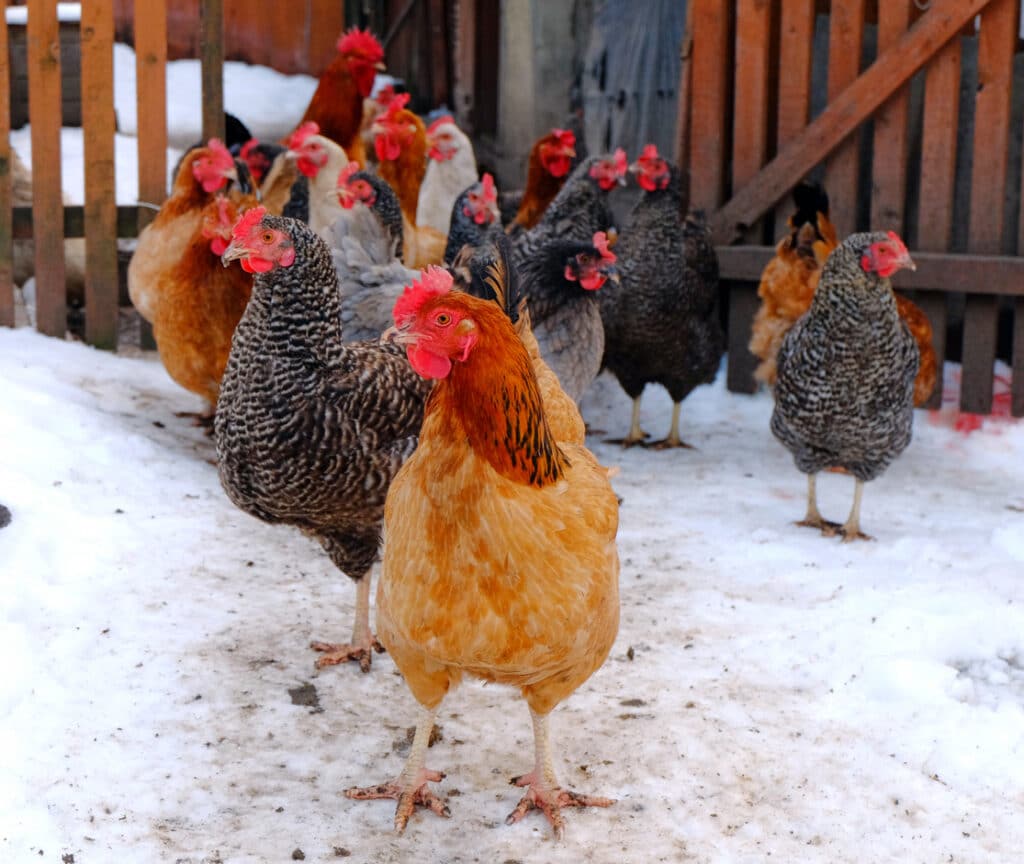
In the cold, be sure to monitor your chickens’ behavior closely. In general, heavier, hardier breeds tend to do best in areas of extreme cold. Ameraucanas, Buff Orpingtons, Cochins, Delawares, New Hampshires, Rhode Island Reds, and Wyandottes are some examples of breeds that will fare best throughout the winter months. No matter what breed your chickens may be, they all exhibit similar behaviors during the colder months. They will often group together, fluffing up their feathers and standing on one leg to keep themselves warm.
Despite the harshness of winter, chickens are surprisingly hardy. However, as their owners, we need to do our part to ensure their comfort and health. If you consider your lighting, coop design, water source, and some methods of extra care, your chickens are bound to stay happy and healthy this winter. A bonus? You could have eggs year-round!